
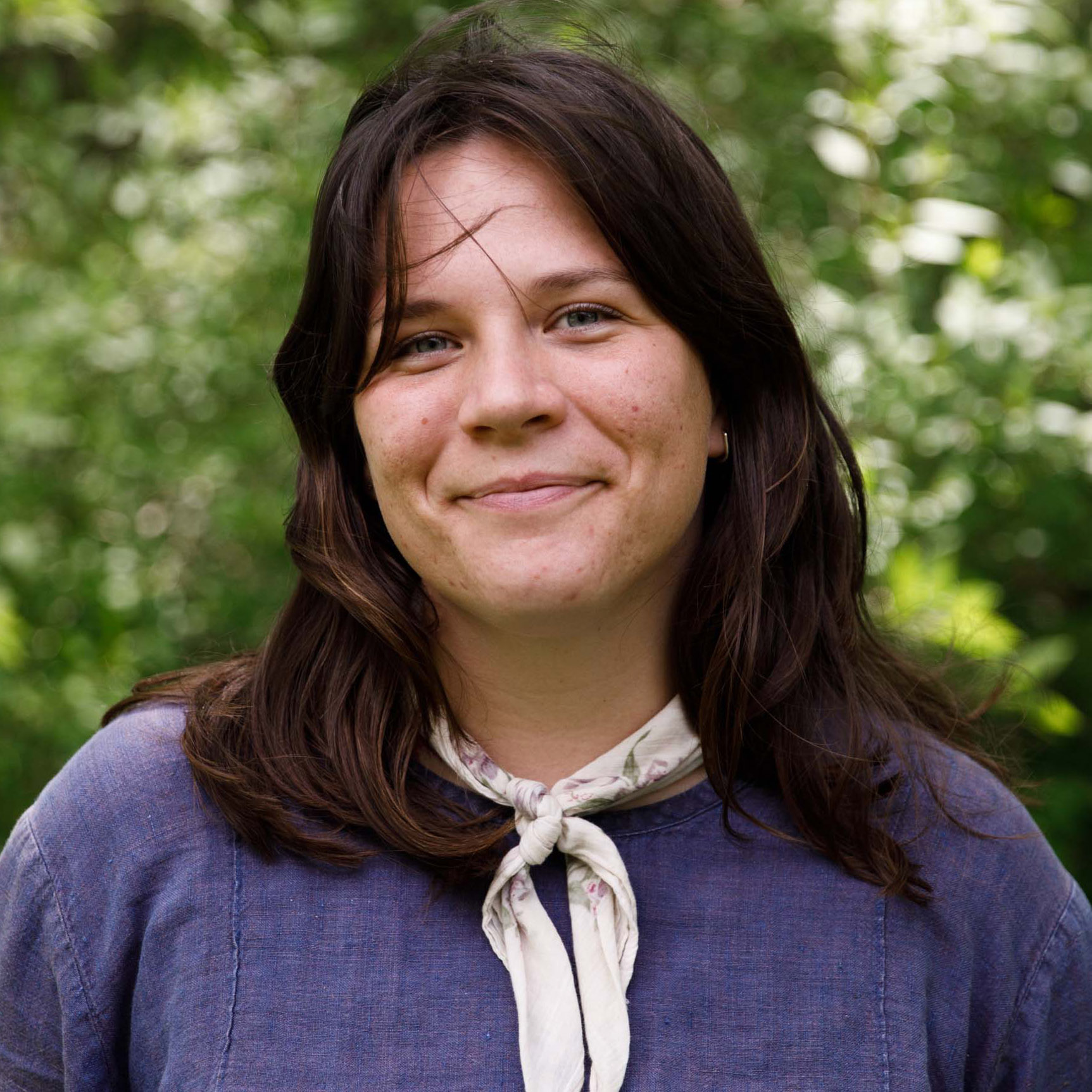
Dairy Climate Adaptation and Mitigation Fellow Emily McCarthy worked with dairy farmer Neal Foley to manage excess water on his farm.
Dairy Climate Adaptation and Mitigation Fellowship (Dairy CAMF) advisor fellow Emily McCarthy partnered with dairy farmer Neal Foley to increase farm resilience in Waldoboro, Maine. Emily worked for the Maine Farmland Trust (MFT) as part of two different teams supporting farmers with conservation easements on farm properties and helping interested farmers develop climate adaptation plans. For many years, Emily has known Neal, who operates a small-scale dairy farm, East Forty Farm and Lakin’s Gorges Cheeses, with his wife in Waldoboro, Maine. In 2022, Emily began working on the stewardship of the conservation easement on East Forty Farm.
Emily shared that her priority in her role with MFT was “To center the farmers’ perspective and their observations on climate resilience.” She feels that it’s crucial to listen to farmers about the climate risks they see on their farms. “A farmer knows their land the best. My goal is to help farmers notice patterns of what is happening on the farm and then build out different resources and priorities to address first. ” After a period of identifying climate risk on Neal’s property, Emily and Neal worked together to develop solutions that build resilience on the farm.
Neal, who shares his experience with farming and cheese making on a YouTube channel, highlighted one central problem that became the focus of their efforts: water runoff. The farmstead portion of East Forty Farm is located on a slope and is packed with buildings and other infrastructure. This location has frequent issues with standing water and excessive erosion. Throughout their time in the Dairy CAMF program, Emily and Neal worked to implement a drainage project that would divert this water elsewhere.
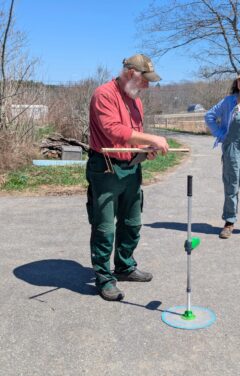
Neal Foley presenting his pasture health tools. Photo from Emily McCarthy.
Excess runoff has made it difficult to keep Neal’s cattle in dry bedding. Searching for solutions, Neal considered implementing projects the farm had used before. However, no previous method would be the right fit. Instead, Neal chose to install a new drainage and water catchment system. This system allows him to divert water without changing the layout of the farmstead area. The new system also offers additional benefits for Neal. It allows him to move clean water throughout the property for irrigation and to collect and keep dirty water separate in holding tanks, preventing it from polluting the surrounding area.
As Emily reflected on her experience with Dairy CAMF, she shared that she appreciated the camaraderie she witnessed between farmers. “Observing farmers connecting with one another and validating the struggles others have had, then finding some threads of a potential solution together was really cool!” she shared. Emily also highlighted how impressed she is with dairy farmers and their tenacity; “Neal’s ability to adjust to these risks just goes to show how talented and resilient these farmers really are.”
Climate Adaptation and Mitigation Fellowship (CAMF) is a program of Cornell University and the USDA Northeast Climate Hub. It supports farmers with climate adaptation and mitigation strategies. The program trains farmers and ag advisors to develop and implement resiliency plans for their farms.
Read the full story: Emily McCarthy Success Story